


2026-04-14 14:18:05
|
 1122
1122
 0
0
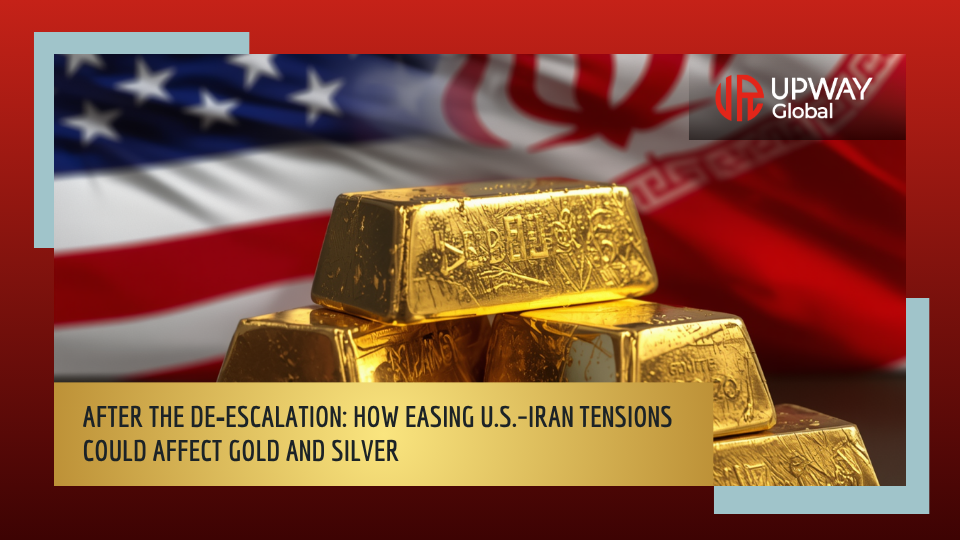
From the Retreat of “Geopolitical Premium” to Macro Driven Repricing
In recent weeks, signs of a phase wise deescalation in the military standoff between Iran and the United States have emerged. With both sides signaling ceasefire windows, extended negotiations, and a shared intention to limit the risk of further escalation, market concerns over a broad spillover of Middle East conflict have moderated. From a market perspective, this implies that the geopolitical risk premium, which rose sharply earlier, is beginning to unwind, prompting a reassessment of the pricing framework for both gold and silver.
It is important to stress that deescalation does not equate to the elimination of risk. Rather, its impact on precious metal prices is more likely to manifest as a structural shift in drivers, instead of a straightforward reversal in trend.
What Does the Pullback in Geopolitical Premium Mean for Gold?
During periods of acute escalation, gold typically benefits first as a traditional safe haven asset, with prices incorporating a clear event driven geopolitical premium. Once markets gain confidence that conflict is unlikely to intensify in the near term, that specific premium naturally comes under pressure.
Historically, however, easing geopolitical tensions have rarely resulted in abrupt or sustained declines in gold prices. Instead, gold more often transitions into a phase of slower upside momentum or range bound consolidation. This reflects the fact that gold’s medium to long term valuation is shaped not by any single conflict, but by a broader set of macroeconomic variables — including real interest rates, monetary policy expectations, U.S. dollar dynamics, and global asset allocation demand.
Against the current backdrop, even if U.S.–Iran tensions subside on a temporary basis, gold is likely to remain well supported so long as global uncertainty, along with structural fiscal and monetary challenges, persists.
Interest Rates and the Dollar Reemerge as Gold’s Core Anchors
As war related uncertainty fades at the margin, market focus typically shifts back to the monetary environment. For gold, real interest rates and the U.S. dollar remain the primary determinants of medium term direction.
If deescalation contributes to easing oil prices and moderating inflation pressures, it could provide central banks greater flexibility over time, potentially altering interest rate expectations in a way that supports gold. Conversely, if markets interpret easing tensions as a broader reduction in risk, prompting capital flows toward yield bearing assets and a stronger dollar, gold is more likely to remain range bound at elevated levels rather than extend a one directional rally.
In this sense, de escalation should not be viewed as unequivocally bullish or bearish for gold, but rather as a catalyst for its pricing to shift from sentiment driven toward fundamentals driven dynamics.
Silver’s Response May Be More Sensitive and Differentiated
Compared with gold, silver’s reaction to easing U.S.–Iran tensions is typically more nuanced. While silver shares gold’s precious metal characteristics and thus experiences a contraction in safe haven demand as risk sentiment normalizes, it also possesses a significant industrial component, making it particularly sensitive to global growth expectations.
In a de escalation scenario that coincides with improving economic and manufacturing outlooks, silver’s industrial demand narrative may regain prominence, allowing its performance to potentially match or even outperform gold on a relative basis. Conversely, if easing tensions fail to materially improve growth prospects while financial conditions tighten, silver is more prone to amplified volatility and deeper pullbacks relative to gold.
This duality reinforces silver’s current profile as a more cyclical and high beta asset, with price movements highly responsive to shifting macro expectations.
De escalation as the Start of a New Phase, Not the End of the Cycle
Taken together, the cooling of U.S.–Iran tensions should be viewed less as a definitive turning point and more as a reordering of pricing priorities. The safe haven narrative that dominated during the height of the crisis is gradually giving way to more traditional and persistent macro drivers — notably interest rates, growth prospects, and liquidity conditions.
For gold, this implies a reinforced role as a strategic allocation and portfolio hedge, with price behavior increasingly characterized by consolidation and structural resilience rather than reliance on single geopolitical catalysts. For investors, phased allocation and continuous monitoring of macro variables are likely to be more effective than attempting to trade the conflict trajectory itself.
For silver, opportunities remain, but its higher industrial exposure introduces greater volatility and uncertainty. As such, silver is better positioned as a satellite or opportunistic asset within portfolios, demanding tighter position sizing and more active risk management.
Overall, geopolitical de escalation does not mark the conclusion of the precious metals cycle, but rather a transition from emotion driven pricing toward macro led valuation. In this environment, constructing an adaptable investment framework across different scenarios may prove more valuable than attempting to anticipate the next geopolitical headline.
Upway Global: At the Forefront of Gold Trading and Market Excellence
As one of the elite members of the Hong Kong Gold Exchange (HKGX) with AA operation status (Membership No. 084) and a core member of the Bullion Group, Upway Global was awarded the prestigious "Authorised Good Delivery Bars Minter" certification—the highest standard in refining and delivery of physical gold bars, confirming its capability to produce gold bars that meet international purity and quality standards. This recognition signifies Upway Global’s commitment to upholding industry-leading professionalism and integrity while reinforcing Hong Kong’s position as Asia’s global gold trading hub.
Demonstrating robust market strength, Upway Global’s daily transaction volume recently surpassed USD 80 billion, setting a record and underscoring its role as a market leader. With over 2.1 million active traders and a cumulative order volume exceeding 700 million, Upway Global continues to foster a trading ecosystem characterised by transparency, security, and efficiency. The company’s average monthly trading volume in 2025 til now exceeded USD 798.6 billion, making it the top performer on the HKGX platform.
Risk Disclosure
This report is based on publicly available information and mainstream media coverage. Policies and data may change upon release of official documents or judicial rulings. Precious metal prices are affected by USD dynamics, interest rates, geopolitics, and central bank demand, among other factors, and are subject to significant volatility. Any investment views herein are for reference only and do not constitute investment or trading advice for any individual. Please assess decisions prudently in light of your own risk tolerance and financial conditions.





 简体中文
简体中文

 繁體中文
繁體中文


 TradingView
 MT5 Web
 Spot Gold/Spot Silver
 Accounts
 Wallet
 Promotions
 Trading Tools
 News Updates
 Economic Calendar
 Investment Academy
 Beginner’s Guide
 Anti-Fraud Guide
 FAQs
FAQs
 Upway APP
 Upway Desktop
 CTOTrader
 Upway HD
 MetaTrader 4
 About Upway
 Company News
 Affiliate Program
 Contact Us
