


2026-05-12 11:01:14
|
 714
714
 0
0
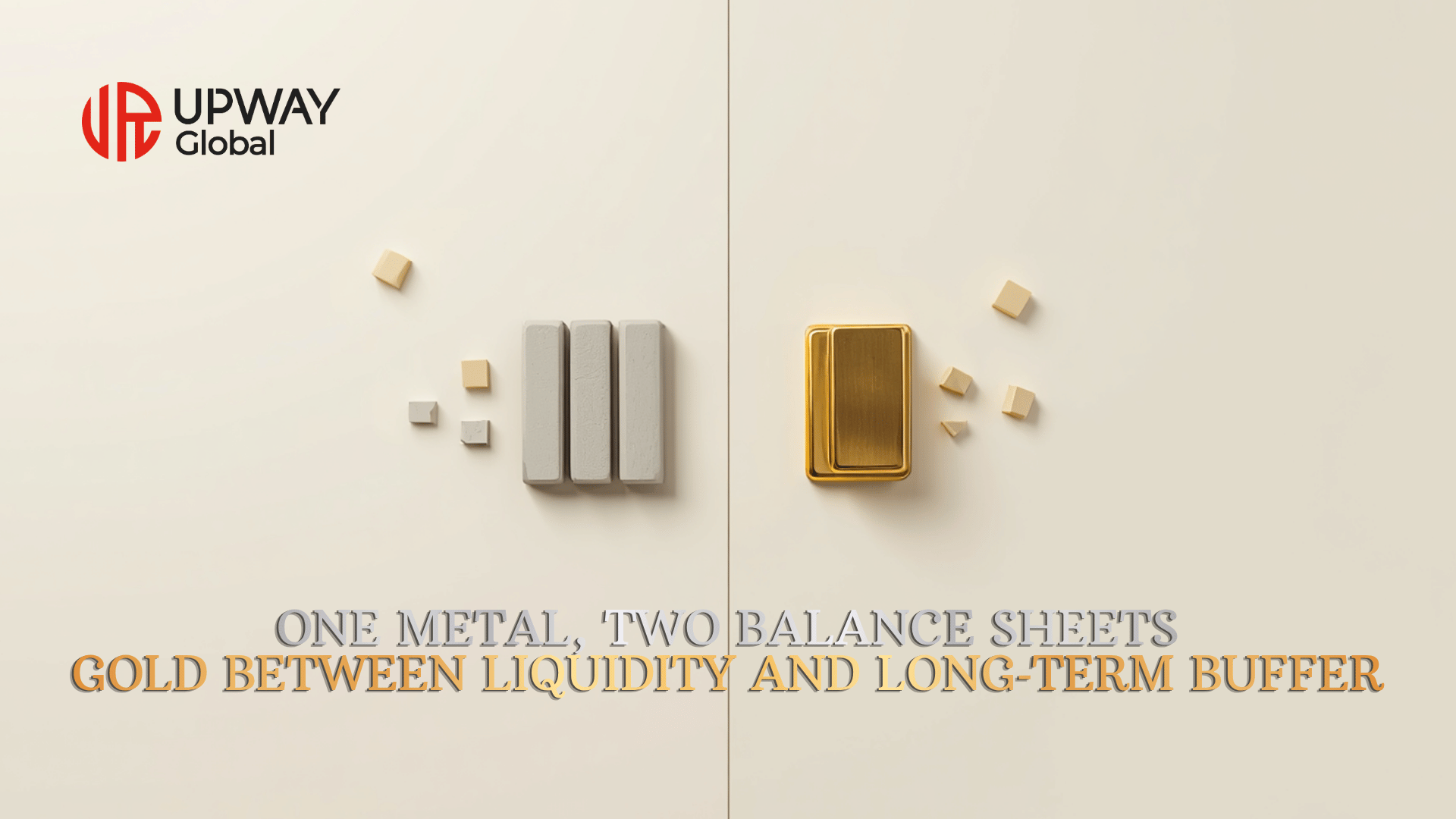
In recent years, gold has increasingly played two seemingly opposite roles at the same time. On the one hand, it remains a structural buffer on many official balance sheets. On the other, it is often one of the first assets used to raise cash when market stress intensifies.
Looking at these two roles side by side can help shift the focus from single price moves to the underlying structure of capital and risk in the market.
1. On official balance sheets: a structural buffer
From an official and long-term institutional perspective, gold is often treated as a structural holding. International reports and research note that, against a backdrop of rising global debt, changing monetary regimes and elevated geopolitical uncertainty over the past decade, many central banks have continued to add to their gold reserves as a complement to other reserve assets.
Within this “official balance sheet”, the emphasis tends to be on: how gold correlates with other reserve assets such as certain government bonds; its impact on overall reserve-portfolio volatility across different inflation and rate scenarios; the diversification it offers at the sovereign level in a more multipolar and uncertain policy environment.
For these holders, gold functions as a long-horizon risk-management tool, with decision cycles often measured in years rather than months.
2. In market accounts: a source of liquidity
In day-to-day market activity and portfolio management, gold appears in another, much more tactical ledger: the liquidity account. As derivatives, cross-asset strategies and various structured products have become more common, gold is not only a potential defensive asset but also a highly traded, relatively deep market that can be used to raise cash when needed.
When stress builds, this ledger tends to prioritise questions such as:
Which positions still have accumulated gains and can be sold to free up cash?
Which assets offer enough depth to allow rapid size adjustments without excessive price impact?
This is one reason why, in later stages of stress episodes, gold can sometimes be sold even as uncertainty remains elevated, creating the appearance that “safe-haven logic has failed” when, in fact, its liquidity function has come to the foreground.
3. When both ledgers operate in the same market
These two balance sheets — the official and the market?based — coexist in the same underlying gold market. Structural demand from official and long-term allocators can provide a foundation, while shorter-term trading and liquidity needs add a more rhythmic pattern of fluctuations on top.
This overlap can produce several observable patterns: in the early stages of uncertainty, safe-haven narratives and inflows may push prices higher; as stress persists and some investors need to adjust positions or meet margin calls, gold may become a preferred source of liquidity, leading to short-term corrections; over longer horizons, official holdings and structural use cases may still shape how gold behaves across macro scenarios, even if this is not obvious from any single trading day.
4. From price moves back to the questions we ask
Against this backdrop, the way questions are framed becomes crucial. Instead of asking only whether gold is “still a safe haven”, it may be more informative to ask:
Is gold still treated as a structural diversifier on official balance sheets?
To what extent is it also being used as a short-term liquidity source when market funding pressures rise?
Over which time frame, and under which balance sheet, is today’s price action primarily being driven?
Seen this way, gold’s contemporary role is less about a binary label and more about how one asset can sit at the junction of multiple functions across different holders and horizons.
Recognising this can help place short-term volatility within a broader picture of how risk and liquidity are managed in today’s markets.
Upway Global: Driving New Patterns in Gold Investment
Upway Global, a prominent brand under Upway Group, has been rooted in the market for over 16 years, holding Grade AA member status (No. 084) at the HKGX and serving as a core member of Bullion Group. As a key player in the precious metals investment sector, Upway Global strictly follows international purity and quality standards, earning the prestigious “Recognised Delivery Bar Refiner Certificate,” ranking among Hong Kong’s top refiners. The brand focuses on offering diverse electronic trading in precious metals, its outstanding market performance includes a single-day XAU turnover reaching USD 80.75 billion in 2025, with over 2.1 million active members and over 7.6 billion cumulative orders, maintaining the highest average monthly trading volume at the HKGX.
At the same
time, Upway Global recognises that user experience is central to brand
competitiveness. Our platform offers 24/7 multilingual customer support, with
dedicated service specialists assisting clients around the clock. Standing side
by side with investors in a rapidly changing market, Upway Global helps clients
achieve steady asset growth through reliable and professional services.
Risk Disclosure
This report is based on publicly available information and mainstream media coverage. Policies and data may change upon release of official documents or judicial rulings. Precious metal prices are affected by USD dynamics, interest rates, geopolitics, and central bank demand, among other factors, and are subject to significant volatility. Any investment views herein are for reference only and do not constitute investment or trading advice for any individual. Please assess decisions prudently in light of your own risk tolerance and financial conditions.





 简体中文
简体中文

 繁體中文
繁體中文


 TradingView
 MT5 Web
 Spot Gold/Spot Silver
 Accounts
 Wallet
 Promotions
 Trading Tools
 News Updates
 Economic Calendar
 Investment Academy
 Beginner’s Guide
 Anti-Fraud Guide
 FAQs
FAQs
 Upway APP
 Upway Desktop
 CTOTrader
 Upway HD
 MetaTrader 4
 About Upway
 Company News
 Affiliate Program
 Contact Us
