


2026-11-10 15:55:03
|
 11
 0
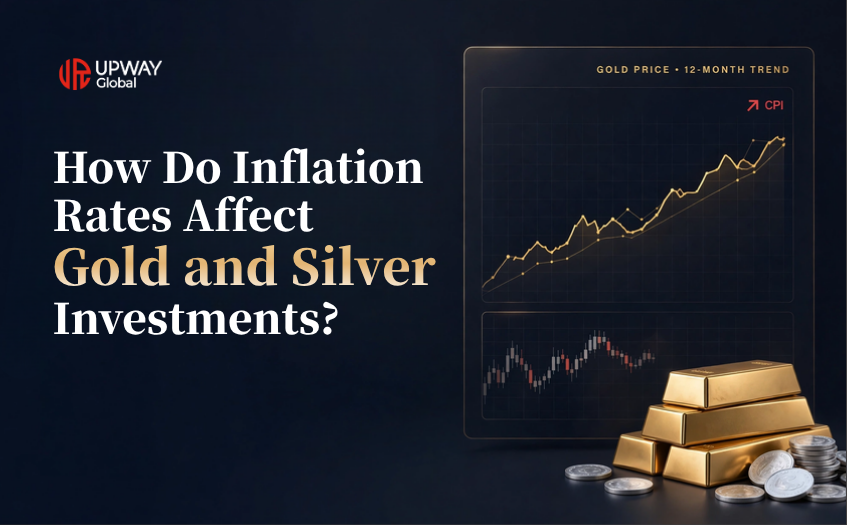
In precious metals investing, inflation affects the prices of gold and silver indirectly by influencing purchasing power, interest rate expectations and the US dollar. However, rising consumer prices do not necessarily mean that precious metals will also increase in value. If inflation leads to higher interest rates and a stronger US dollar, gold and silver prices may come under pressure. Therefore, the relationship between inflation and precious metals prices is not simply positive or negative. Market expectations and broader economic conditions also play an important role.
The Relationship Between Inflation and Precious Metals Prices
Inflation measures the rate at which the prices of goods and services rise over time. When inflation remains elevated, the purchasing power of money gradually declines. In response, some investors may turn to assets such as gold and silver to help preserve their wealth and hedge against the erosion of purchasing power.
However, being considered an inflation hedge does not mean that precious metals prices will only move upwards. In the short term, their prices are also influenced by interest rates, the US dollar, market sentiment and changes in supply and demand. As a result, gold and silver can sometimes fall even when inflation is high.
Why Rising Inflation Can Also Put Pressure on Gold
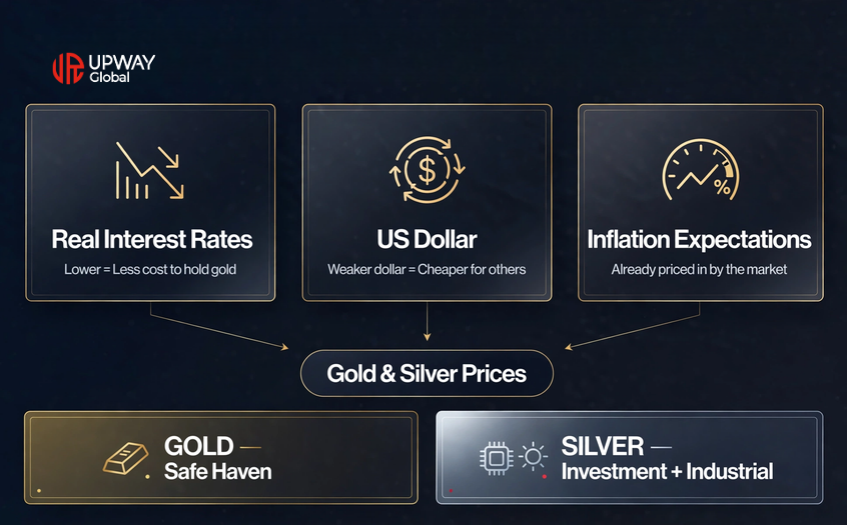
Rising inflation can affect gold through two opposing channels. On one hand, if inflation increases while real interest rates decline or turn negative, gold may become more attractive as a store of value. On the other hand, if inflation remains too high, central banks may tighten monetary policy, raising interest rate expectations and potentially strengthening the US dollar. This tightening can put pressure on gold prices.
In addition, gold is generally priced in US dollars, so a stronger dollar may also weigh on its price. Whether rising inflation benefits or hurts gold ultimately depends on how it changes market expectations for interest rates and the US dollar.
Why Can Gold Prices Fall After Inflation Data Is Released?
When assessing inflation data, investors should look beyond whether the figures are high or low. It is equally important to compare previous readings, market expectations and the actual figures released.
For example, in the US inflation data for September 2026, the Consumer Price Index (CPI) rose by 3.7% year on year, while core CPI increased by 2.6%. Over the same period, the Personal Consumption Expenditures (PCE) Price Index rose by 3.6% year on year, with core PCE increasing by 3.1%. The CPI also climbed by 0.6% month on month, partly driven by a 9.1% increase in gasoline prices, which was a major contributor to the rise in overall inflation.
These figures illustrate that headline inflation and core inflation, which excludes food and energy prices, can differ. Suppose the market had expected inflation to accelerate further, but the actual figures came in below expectations. Investors might then lower their expectations for further interest rate hikes, potentially supporting gold prices. Conversely, if inflation data exceeds expectations, concerns that interest rates will remain elevated could weigh on gold.
It is also worth noting that markets may adjust their positions ahead of an inflation announcement. If the figures come in broadly in line with expectations, even relatively high inflation may not be enough to push gold prices higher. This helps explain why gold sometimes moves in the opposite direction to what investors might initially expect after inflation data is released.
Gold and Silver Do Not Respond to Inflation in the Same Way
Gold is primarily valued for its financial and safe-haven characteristics. In addition to inflation, its price is influenced by real interest rates, US dollar movements, central bank gold purchases and demand for safe-haven assets.
Silver, by contrast, has both financial and industrial uses. It is widely used in sectors such as electronics and solar energy. As a result, its price is affected not only by inflation, interest rates and the US dollar, but also by manufacturing activity and industrial demand.
For example, if rising inflation coincides with economic expansion, stronger industrial demand may provide additional support for silver prices. However, if inflation rises alongside an economic slowdown, industrial demand may weaken, causing silver to perform differently from gold.
What Should Investors Consider When Investing in Precious Metals During Inflationary Periods?
Inflation is just one of the indicators investors should consider when analysing precious metals prices. It is important to assess the factors affecting gold and silver individually rather than relying on inflation data alone.
For those trading products such as Spot Gold and Spot Silver, it is also important to understand overnight interest, spreads and other trading costs.
Upway Global reminds investors to familiarise themselves with the relevant product terms and potential risks before trading, and to manage their funds prudently. Investment decisions should not be based solely on a single inflation report.
This article is for educational purposes only and does not constitute investment advice.


 简体中文

 繁體中文


 TradingView
 MT5 Web
 Spot Gold/Spot Silver
 Accounts
 Wallet
 Promotions
 Trading Tools
 News Updates
 Economic Calendar
 Investment Academy
 Beginner’s Guide
 Anti-Fraud Guide
 FAQs
 Upway APP
 Upway Desktop
 CTOTrader
 Upway HD
 MetaTrader 4
 About Upway
 Company News
 Affiliate Program
 Contact Us
