


2026-03-04 15:34:14
|
 889
889
 0
0
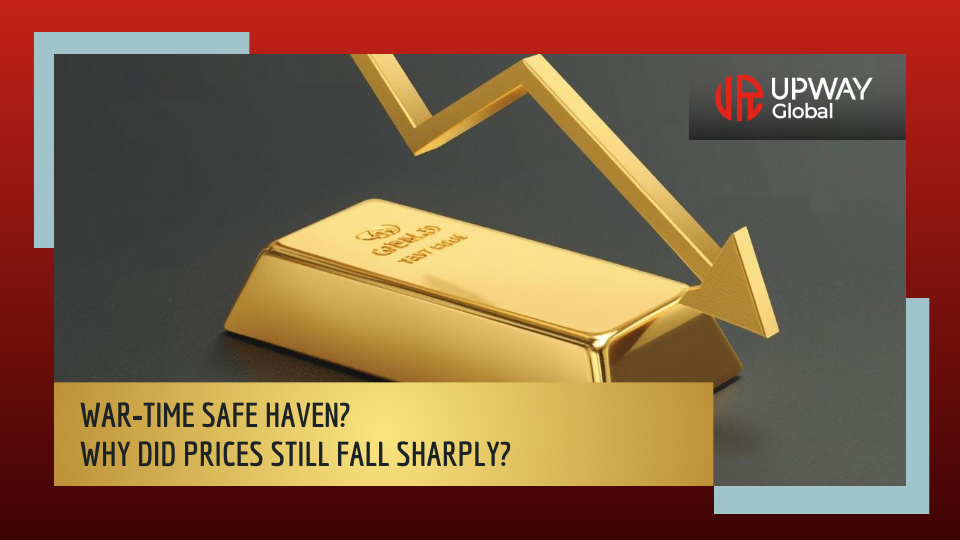
Why Did the War Initially Lift Gold? — The Safe Haven “First Response”
As the United States and Israel conducted intensive strikes against Iran and Tehran retaliated with missiles and drones, risk around the Strait of Hormuz—one of the world’s most critical energy chokepoints—spiked. Markets swiftly repriced spillover risks to energy supply, shipping costs and broader financial conditions, and capital rotated into “no counterparty” safe haven assets such as gold and silver. During the March 1–2 escalation, spot gold pushed up toward $5,300–$5,400/oz, while silver probed the $90–$94/oz zone—moves widely linked to classic war premium mechanics: heightened geopolitical risk → higher oil prices → firmer inflation expectations → lower real yields → stronger precious metals valuations.
At the same time, with roughly one fifth of global crude and LNG transiting Hormuz, operational and insurance risks rose sharply; selective shutdowns and reroutes lifted Brent and WTI in consecutive sessions, reinforcing the short term “war time inflation premium” that supports bullion.
Why the Sudden Reversal From the Highs? — Macro Repricing Overrode War Time Haven Flows
The key point is that haven buying was the market’s first impulse; macro and liquidity variables quickly reclaimed center stage. As oil jumped, investors repriced for “second round” inflation and a longer period of higher policy rates, pushing both the U.S. dollar and Treasury yields higher. The result was a classic flight to liquidity episode: in the near term, investors raised cash and trimmed non yielding assets, dragging gold lower from the highs. Real time coverage on March 3 (ET) flagged a stronger dollar, firmer yields and a cash preference pivot as the day’s primary catalysts for the drop.
Importantly, oil strength does not only mean “more haven demand.” It can also push out rate cut expectations, compressing gold’s relative carry and creating the short term paradox of “higher oil, softer gold.” Several same day commentaries and post close notes attributed gold’s retreat to precisely this combination—dollar strength and fading near term cut bets—a second order effect of the oil spike.
Finally, positioning and technicals magnified the move. After multiple tests of record/near record levels, positioning had become crowded and momentum heavy. When the USD/rates/oil narrative turned, profit taking and CTA/momentum de risking landed in sync, steepening the slide. Intraday color on March 3 repeatedly cited “profit taking + stronger USD” as triggers and reminded clients that extreme upside phases often require both time and lower prices to repair.
Why Did Silver Fall Even More? — High Beta Duality as a Volatility Amplifier
Silver carries both safe haven and industrial demand identities and historically exhibits higher volatility than gold. In the March 3 pullback, silver’s single day decline outpaced gold’s, consistent with its high beta profile. When war driven oil shocks blur the macro outlook and manufacturing sentiment wobbles, silver’s sensitivity to electronics/renewables supply chains and capex amplifies both upside and downside: it leads on the way up—and drops harder on the way down. With silver’s prior gains already extreme, the confluence of a firmer USD, data/event risk, and momentum de risking made technical repair more urgent for silver than for gold.
Oil: The Central Bridge Between Geopolitics and Bullion
Oil is the bridge that explains the “up thenndown” pattern. As the conflict broadened, shipping hazards multiplied and facilities were disrupted, Brent marched into the $82–$85/bbl zone, with multiple +6–8% bursts. Once the Energy → Inflation → Rates → USD chain fired, bullion faced a push pull: haven flows on one side and relative carry headwinds on the other—a recipe for wide, two way ranges rather than a clean, one way rally. Major desks and wires throughout Mar 2–4 characterized the phase as “firm oil + inflation worry = delayed cuts”, a critical backdrop for the “spike and fade” in precious metals.
Price & Pace: How to Judge a Second Stage Stabilization After the Drop
After the swift drawdown on Mar 3, Mar 4 saw a technical bounce, with spot gold rebounding to the $5,150–$5,160/oz area—evidence that allocation and haven demand have not vanished, but price is now far more sensitive to the paths of the USD and oil. Near term, watch $5,000 as psychological/liquidity support and $5,200–$5,300 as the first retest zone; sustained, higher volume holds would open a discussion about reprobing $5,400–$5,600. With ADP, PMI, Beige Book, payrolls and rolling Middle East headlines crowding the tape, haven surges and macro repricing will likely alternate, meaning gold could complete a “price and time” repair in a high volatility regime. Tactically, that favors event driven scaling and stricter position and stop discipline, rather than chasing a linear trend.
The U.S.–Iran war is not an isolated shock; its impact travels through energy → inflation → rates → USD → assets, pushing precious metals into a high volatility zone where haven surges and macro repricing take turns in control. For institutions and HNW investors, the steadier approach is not a single bet, but a framework: keep gold as the core defensive allocation, use silver as the tactical return enhancer, and complement both with cross asset hedges and event driven rebalancing. As the Mar 4 tape shows, haven demand remains, but sensitivity to the USD and oil trajectories has increased materially. The next phase is not about impulsive buying or panic selling; it is about following the data and the headline calendar, and executing along three axes—levels, cadence, and risk budgets.
Upway Global: At the Forefront of Gold Trading and Market Excellence
As one of the elite members of the Hong Kong Gold Exchange (HKGX) with AA operation status (Membership No. 084) and a core member of the Bullion Group, Upway Global was awarded the prestigious "Authorised Good Delivery Bars Minter" certification—the highest standard in refining and delivery of physical gold bars, confirming its capability to produce gold bars that meet international purity and quality standards. This recognition signifies Upway Global’s commitment to upholding industry-leading professionalism and integrity while reinforcing Hong Kong’s position as Asia’s global gold trading hub.
Demonstrating robust market strength, Upway Global’s daily transaction volume recently surpassed USD 80 billion, setting a record and underscoring its role as a market leader. With over 2.1 million active traders and a cumulative order volume exceeding 700 million, Upway Global continues to foster a trading ecosystem characterised by transparency, security, and efficiency. The company’s average monthly trading volume in 2025 til now exceeded USD 708.9 billion, making it the top performer on the HKGX platform.
Risk Disclosure
This report is based on publicly available information and mainstream media coverage. Policies and data may change upon release of official documents or judicial rulings. Precious metal prices are affected by USD dynamics, interest rates, geopolitics, and central bank demand, among other factors, and are subject to significant volatility. Any investment views herein are for reference only and do not constitute investment or trading advice for any individual. Please assess decisions prudently in light of your own risk tolerance and financial conditions.





 简体中文
简体中文

 繁體中文
繁體中文


 TradingView
 MT5 Web
 Spot Gold/Spot Silver
 Accounts
 Wallet
 Promotions
 Trading Tools
 News Updates
 Economic Calendar
 Investment Academy
 Beginner’s Guide
 Anti-Fraud Guide
 FAQs
FAQs
 Upway APP
 Upway Desktop
 CTOTrader
 Upway HD
 MetaTrader 4
 About Upway
 Company News
 Affiliate Program
 Contact Us
