


2026-10-27 15:04:55
|
 1
 0
When investing in silver, understanding how a product is traded is just as important as analyzing silver price movements. For example, trading Spot Silver through a trading platform and trading silver futures on an exchange may both offer opportunities to profit from price movements. However, they differ in execution methods, trading rules, and costs.
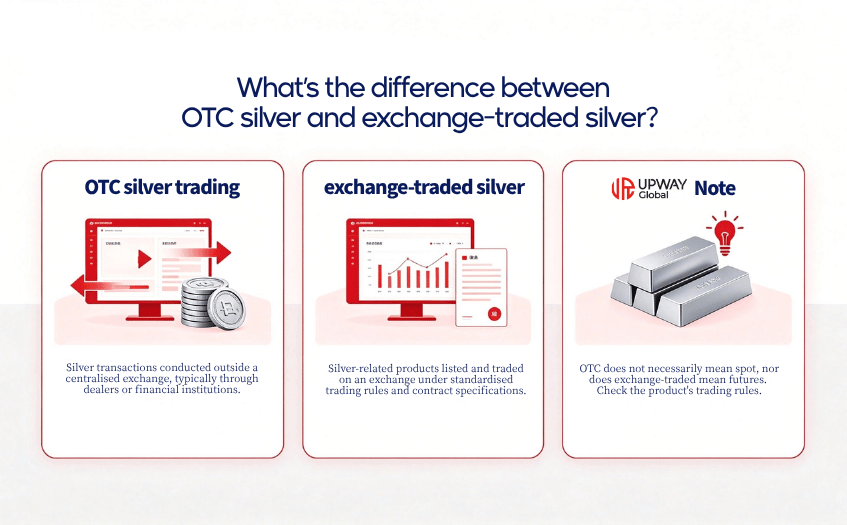
What Are OTC Silver Trading and Exchange-Traded Silver?
OTC Silver Trading refers to transactions conducted outside a centralized exchange trading system. Trades may be arranged directly between counterparties or through dealers and financial institutions.
For some OTC Spot Silver products, dealers provide bid and ask prices, and investors buy or sell based on those quotes. Profits and losses are calculated according to the product's terms. These products do not necessarily involve physical silver, depending on their contractual arrangements.
Exchange-Traded Silver refers to silver-related products listed and traded on an exchange. Silver futures are a common example. Exchanges establish contract specifications, trading rules, and expiration dates. Investors trade these products according to the relevant exchange mechanisms. Trading an exchange-listed silver product does not necessarily mean that investors will receive physical silver.
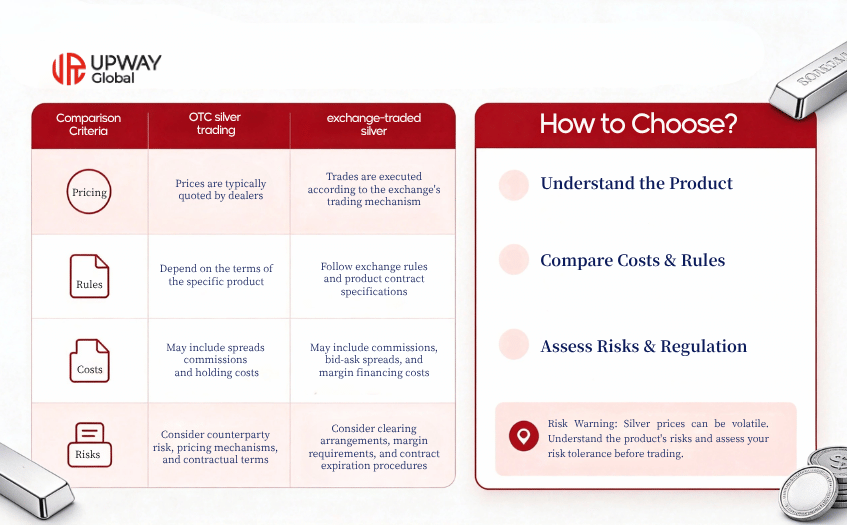
Key Differences Between OTC Silver Trading and Exchange-Traded Silver
1. Pricing and Execution
OTC Silver Trading typically involves prices quoted by dealers, with investors buying or selling at the applicable bid or ask price. Exchange-traded products, by contrast, are executed through exchange mechanisms, such as order matching.
Investors should understand how prices are determined and how orders are executed for their chosen products.
2. Trading Rules
For OTC Silver Trading, contract sizes, trading hours, and settlement arrangements are generally determined by the terms of the specific product. Exchange-traded silver products, such as futures, typically use standardized contracts with specified expiration dates.
3. Trading Costs
Exchange-traded silver products may involve transaction fees, bid-ask spreads, and costs associated with margin requirements, depending on the product's rules. OTC Silver Trading may involve spreads, commissions, or holding costs.
For example, suppose an OTC Spot Silver product has a bid price of USD 50.00 per ounce and an ask price of USD 50.10 per ounce. If an investor buys at USD 50.10 and immediately sells at USD 50.00, the transaction results in a spread-related loss of USD 0.10 per ounce, excluding other costs.
This illustrates why investors should consider trading costs alongside their expectations for silver price movements.
4. Settlement Arrangements and Risks
For OTC Silver Trading, investors should understand the counterparty, pricing mechanism, and contractual terms. For exchange-traded products, they should review the applicable clearing arrangements, fees, and settlement rules.
Some silver products support physical delivery, while others are cash-settled or recorded as account balances. Whether physical silver can be withdrawn depends on the specific product's terms and conditions.
What Should Investors Know Before Trading Silver?
Before choosing a silver product, investors should first identify its type, distinguishing between spot products, futures, and other silver-related instruments. They should then review trading hours, spreads, commissions, margin requirements, and settlement rules.
It is also important to verify the trading provider's relevant credentials, understand the applicable regulatory requirements and risk disclosures, and confirm that the product complies with the regulations in the investor's jurisdiction.
For example, investors considering Upway Global's Spot Silver products can consult official channels for product specifications, pricing methods, trading costs, and applicable trading rules before making a decision based on their individual risk tolerance.
The difference between OTC Silver Trading and Exchange-Traded Silver extends beyond how trades are executed. It also involves product-specific trading rules, costs, and settlement arrangements. Before trading, investors should understand exactly what they are buying or selling and the costs and risks involved.
This article is for educational purposes only and does not constitute investment advice. Silver prices can be highly volatile. Investors should carefully assess the risks before trading.


 简体中文

 繁體中文


 TradingView
 MT5 Web
 Spot Gold/Spot Silver
 Accounts
 Wallet
 Promotions
 Trading Tools
 News Updates
 Economic Calendar
 Investment Academy
 Beginner’s Guide
 Anti-Fraud Guide
 FAQs
 Upway APP
 Upway Desktop
 CTOTrader
 Upway HD
 MetaTrader 4
 About Upway
 Company News
 Affiliate Program
 Contact Us

